
 Facebook
 X
 LinkedIn
 Forward

Tackling Binge and Emotional Eating in an Office-Based Program
This session is a recorded presentation from ACLM’s LM2025 Annual Conference, featuring leading experts and timely, clinically relevant content in lifestyle medicine.
Binge and emotional eating are common behaviors that contribute to significant psychological distress and are often associated with overeating, overweight, obesity, and related cardiometabolic conditions. They are present in persons of various age groups, gender, and socioeconomic status. A study of American adults found that over 20% of participants reported eating emotionally often or very often. The DSΜ-5-TR outlines specific diagnostic criteria for binge eating disorder, but does not specify criteria for emotional eating, which is commonly defined as eating to avoid difficult emotions. Emotional and binge eating exist along a continuum and are often underreported and underdiagnosed. Many patients engage in eating behavior in secret and may not report their symptoms or seek help due to shame and fear of judgment. Additionally, many healthcare providers do not have sufficient training in eating disorders and do not routinely screen for them.
While disorders of eating behavior are commonly encountered in primary and specialty care, most providers are not able to provide the necessary care due to insufficient training and time, and concerns about reimbursement. When binge or emotional eating disorders are identified, current treatment options include self-help books or programs, guided self-help programs, and individual- or group-based psychotherapy. Self-help books and programs can be effective, but patients may feel isolated due to a lack of peer-to-peer support or interaction. Individual- or group-based psychotherapy programs are also effective but may be cost prohibitive due to insufficient insurance coverage and access to care. In addition, traditional disordered eating treatment generally advises against restrictive diets, irrespective of weight status, advocating instead for inclusive diets that incorporate all food groups, eliminate food rules, and emphasize moderation. Strict food rules are frequently considered eating disordered behaviors. However, many people dealing with eating disorders are deeply concerned about their mental and physical well-being and are striving to balance the seemingly competing priorities of healthful nourishment and satisfaction with food. To meet these challenges, we launched a novel program to help participants with binge and emotional eating behavior. For the purposes of the program, we defined binge and emotional eating as any eating behavior that is associated with two core features – a sense of a loss control over food intake and subsequent harm to mental or physical health. Persons with anorexia nervosa were not eligible to participate in the program. The program incorporated a multi-disciplinary approach and was led by a clinical psychologist, internal medicine physician, and registered dietitian – all versed in plant-based nutrition and lifestyle medicine. The program duration was 12 weeks and included weekly 60-minute online meetings with 30 to 40 participants. Each weekly meeting included live instruction, peer-to-peer interaction, and support. Participants were assigned weekly homework to foster progress and accountability. The program was based on the principles of cognitive behavioral therapy (CBT) and dialectical behavioral therapy (DBT). A unique feature of the program was the incorporation of plant-based nutrition education. Participants were taught about the benefits of minimally processed plant-based foods, and the role of nutrient density and processed foods in satiety and food addiction. However, it should be noted that participants were not specifically asked to avoid or restrict any foods or food groups.
An essential feature of any treatment program is that it is cost effective for the participants and the instructors; the program was structured so that it provided a relatively low-cost option for the participants while generating enough revenue to make the program financially viable. The cost of the 12-week program was $349 per person, which is equivalent to $29 per session. This cost is significantly less than the cost of traditional individual or group psychotherapy sessions and lower than the cost of most primary care or medical nutrition therapy co-pays while encompassing the expertise of all three healthcare professionals. Assuming an average of 35 participants per 12-week cohort, the program generated over $1,000 per session, which covered the costs of the instructors’ time. The online video meeting format allowed participants across the country to participate in real time. Thus far, we have completed two cohorts of the program with a total of 70 participants. Participants were recruited through advertisements in various social media platforms and the Physicians Committee on Responsible Medicine newsletter. Approximately half of the participants were following or had followed plant-based diets in the past. Most of the participants had tried other intervention programs without success and reported significant improvements in their eating behavior as they completed the program. As a next step, we are planning a similarly structured cohort to track and measure clinical outcomes as part of a research study. Such a program could prove to be a valuable model that other practitioners can use to integrate CBT, DBT, and plant-based nutrition education in the treatment of binge and emotional eating.
This course expires November 23, 2029 at 11:59 PM PST.
Target Audience
This activity is applicable for the interprofessional healthcare team including physicians, registered nurses, nurse practitioners, physician associates, registered dietitians, physical therapists, occupational therapists, pharmacists, other health professionals working with chronic disease prevention or treatment, certified health coaches, and clinicians in training.
Learning Objectives
By the end of this activity, participants will be able to:
- Define binge and emotional eating behavior.
- Describe a guided self-help framework for binge and emotional eating.
- Determine how to incorporate a financially viable program for binge and emotional eating into clinical care.
- Describe how to integrate plant-based nutrition education in the treatment of binge and emotional eating.
You may also be interested in



Activity summary
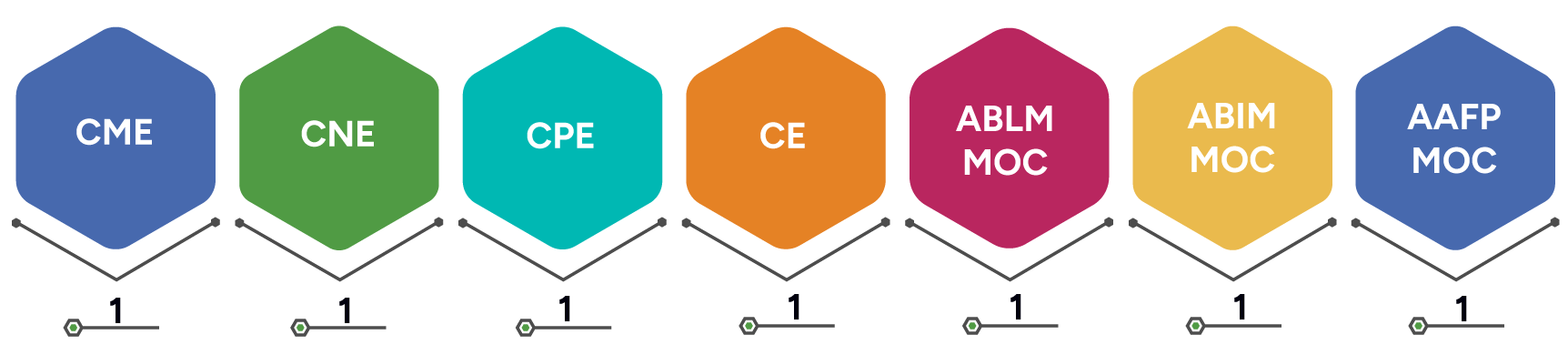
- 1.00 AAFP Prescribed
The AAFP has reviewed Tackling Binge and Emotional Eating in an Office-Based Program and deemed it acceptable for up to 1.00 Enduring Materials, Self-Study AAFP Prescribed credit(s). Term of Approval is from 11/24/2026 to 11/23/2027. Physicians should claim only the credit commensurate with the extent of their participation in the activity.
- 1.00 ABIM Medical Knowledge
Successful completion of this CME activity, which includes participation in the evaluation component, enables the participant to earn up to 1.00 MOC points in the American Board of Internal Medicine’s (ABIM) Maintenance of Certification (MOC) program. It is the CME activity provider’s responsibility to submit participation completion information to ACCME for the purpose of granting ABIM MOC credit.
- 1.00 ABLM MOC
The American Board of Lifestyle Medicine has approved 1.00 maintenance of certification credits (MOC) for this learning activity.
- 1.00 ABS Accredited CME
Successful completion of this CME activity, which includes participation in the evaluation component, enables the learner to earn credit toward the CME of the American Board of Surgery’s Continuous Certification program. It is the CME activity provider’s responsibility to submit learner completion information to ACCME for the purpose of granting ABS credit.
- 1.00 ACPE Pharmacy
The American College of Lifestyle Medicine designates this knowledge-based Enduring material for a maximum of 1.00 contact hour(s) for pharmacists. ACPE credit will be reported to CPE Monitor®. Participants must provide their NABP e-Profile ID and date of birth (MM/DD) to receive credit.
- 1.00 ACPE Technician
The American College of Lifestyle Medicine designates this knowledge-based Enduring material for a maximum of 1.00 contact hour(s) for pharmacy technicians. ACPE credit will be reported to CPE Monitor®. Participants must provide their NABP e-Profile ID and date of birth (MM/DD) to receive credit.
- 1.00 AMA PRA Category 1 Credit™
The American College of Lifestyle Medicine designates this Enduring material for a maximum of 1.00 AMA PRA Category 1 Credit(s)™. Physicians should claim only credit commensurate with the extent of their participation in the activity.
- 1.00 ANCC
The American College of Lifestyle Medicine designates this Enduring material for a maximum of 1.00 nursing contact hour(s).
- 1.00 APA
The American College of Lifestyle Medicine designates this Enduring material for 1.00 CE credits in psychology. Continuing Education (CE) credits for psychologists are provided through the co-sponsorship in the American Psychological Association (APA) Office of Continuing Education in Psychology (CEP). The APA CEP Office maintains responsibility for the content of the programs.
- 1.00 ASWB
As a Jointly Accredited Organization, The American College of Lifestyle Medicine is approved to offer social work continuing education by the Association of Social Work Boards (ASWB) Approved continuing education (ACE) program. Organizations, not individual courses, are approved under this program. Regulatory boards are the final authority on courses accepted for continuing education credit. Social workers completing this course receive 1.00 general continuing education credits.
- 1.00 Attendance
Successful completion of this course activity, including active participation in the evaluation component, entitles the learner to receive a participation certificate from ACLM. Please note that this certificate is offered solely in recognition of engagement, and no academic or professional credit is awarded.
- 1.00 CPEU
This Enduring material has been approved by the Commission on Dietetic Registration. Completion of this activity awards 1.00 CPEUs.
- 1.00 Participation (AMA PRA Category 1 Credit™ for non-physicians)
The American College of Lifestyle Medicine designates this Enduring material for a maximum of 1.00 AMA PRA Category 1 Credit(s)™. Physicians should claim only credit commensurate with the extent of their participation in the activity.
Vanita Rahman, MD, DipABLM
Clinic Director
Barnard Medical Center, Physicians Committee for Responsible Medicine
Liana B. Abascal, PhD, MPH, DipACLM (she/her/hers)
Associate Professor
Alliant International University
Accreditation Statement, Disclosure Information, and Credit Designation Statements
Accreditation Statement:
In support of improving patient care, the American College of Lifestyle Medicine is jointly accredited by the Accreditation Council for Continuing Medical Education (ACCME), Accreditation Council for Pharmacy Education (ACPE), and the American Nurses Credentialing Center (ANCC), to provide continuing education for the healthcare team.
Disclosure Information
In accordance with the ACCME Standards for Integrity and Independence in Accredited Continuing Education, all individuals in control of content for this activity have disclosed all financial relationships with ineligible companies within the prior 24 months. Any relevant financial relationships have been identified, reviewed, and mitigated prior to the start of the activity.
Individuals in control of content have disclosed the following:
- Rohit Moghe, PharmD, MSPH, CDCES: Member, Speaker's Bureau - Novo Nordisk
All remaining planners, faculty, reviewers, moderators, and others in control of content have disclosed no relevant financial relationships with ineligible companies.
The content of this activity has been designed to present evidence-based information that is fair, balanced, and free from commercial bias.
Available Credit
- 1.00 AAFP Prescribed
The AAFP has reviewed Tackling Binge and Emotional Eating in an Office-Based Program and deemed it acceptable for up to 1.00 Enduring Materials, Self-Study AAFP Prescribed credit(s). Term of Approval is from 11/24/2026 to 11/23/2027. Physicians should claim only the credit commensurate with the extent of their participation in the activity.
- 1.00 ABIM Medical Knowledge
Successful completion of this CME activity, which includes participation in the evaluation component, enables the participant to earn up to 1.00 MOC points in the American Board of Internal Medicine’s (ABIM) Maintenance of Certification (MOC) program. It is the CME activity provider’s responsibility to submit participation completion information to ACCME for the purpose of granting ABIM MOC credit.
- 1.00 ABLM MOC
The American Board of Lifestyle Medicine has approved 1.00 maintenance of certification credits (MOC) for this learning activity.
- 1.00 ABS Accredited CME
Successful completion of this CME activity, which includes participation in the evaluation component, enables the learner to earn credit toward the CME of the American Board of Surgery’s Continuous Certification program. It is the CME activity provider’s responsibility to submit learner completion information to ACCME for the purpose of granting ABS credit.
- 1.00 ACPE Pharmacy
The American College of Lifestyle Medicine designates this knowledge-based Enduring material for a maximum of 1.00 contact hour(s) for pharmacists. ACPE credit will be reported to CPE Monitor®. Participants must provide their NABP e-Profile ID and date of birth (MM/DD) to receive credit.
- 1.00 ACPE Technician
The American College of Lifestyle Medicine designates this knowledge-based Enduring material for a maximum of 1.00 contact hour(s) for pharmacy technicians. ACPE credit will be reported to CPE Monitor®. Participants must provide their NABP e-Profile ID and date of birth (MM/DD) to receive credit.
- 1.00 AMA PRA Category 1 Credit™
The American College of Lifestyle Medicine designates this Enduring material for a maximum of 1.00 AMA PRA Category 1 Credit(s)™. Physicians should claim only credit commensurate with the extent of their participation in the activity.
- 1.00 ANCC
The American College of Lifestyle Medicine designates this Enduring material for a maximum of 1.00 nursing contact hour(s).
- 1.00 APA
The American College of Lifestyle Medicine designates this Enduring material for 1.00 CE credits in psychology. Continuing Education (CE) credits for psychologists are provided through the co-sponsorship in the American Psychological Association (APA) Office of Continuing Education in Psychology (CEP). The APA CEP Office maintains responsibility for the content of the programs.
- 1.00 ASWB
As a Jointly Accredited Organization, The American College of Lifestyle Medicine is approved to offer social work continuing education by the Association of Social Work Boards (ASWB) Approved continuing education (ACE) program. Organizations, not individual courses, are approved under this program. Regulatory boards are the final authority on courses accepted for continuing education credit. Social workers completing this course receive 1.00 general continuing education credits.
- 1.00 Attendance
Successful completion of this course activity, including active participation in the evaluation component, entitles the learner to receive a participation certificate from ACLM. Please note that this certificate is offered solely in recognition of engagement, and no academic or professional credit is awarded.
- 1.00 CPEU
This Enduring material has been approved by the Commission on Dietetic Registration. Completion of this activity awards 1.00 CPEUs.
- 1.00 Participation (AMA PRA Category 1 Credit™ for non-physicians)
The American College of Lifestyle Medicine designates this Enduring material for a maximum of 1.00 AMA PRA Category 1 Credit(s)™. Physicians should claim only credit commensurate with the extent of their participation in the activity.
Price
ACLM member and category discounts are applied at checkout.
To receive member-only pricing, please join as a member FIRST, then complete your activity enrollment in a separate transaction. For more information, please click here.
| Non-member | ACLM Members |
|---|---|
| $40 | $30 |
Access to online material is granted through the term of approval, which ends November 23, 2029.
Participant User Agreement (Terms of Use and Copyright)
Before registering for a Continuing Education/Continuing Medical Education Activity (“Training”) for the first time, carefully review the following conditions of usage at https://lifestylemedicine.org/terms-of-use-and-copyright/
Registering for an American College of Lifestyle Medicine Activity indicates your acceptance of the Participant User Agreement and its terms and conditions.
Required Hardware/software
This activity can be viewed on desktop or tablet using a modern browser and most mobile devices. Speakers or headphones are required for this activity.